This past January, I traveled to a small town in Wisconsin’s Driftless region, the southwest corner of the state the glaciers missed, to join a summit of representatives from the far-flung universe of “microcolleges.” The host institution, Thoreau College, was one of several that had spent the last decade quietly forging radical alternatives to traditional higher education in out-of-the-way places like Viroqua, Wisconsin. Our conference venue was, appropriately, a community theater called Arkadia. I was in the company of students, teachers, founders and researchers, hailing from as far away as the temperate rainforests of southeast Alaska, the stark desert of the Great Basin and the hill country of southern Appalachia. We wore every shade of brown, took the day’s dishes in shifts and sang songs in rounds. In an adjacent room, the town of Viroqua was holding their fourth annual “Bardathon,” a week-long 24/7 reading of the entire corpus of Shakespeare, and a parade of bearded men filed in and out to sit for their shifts while we conducted our sessions. Occasionally, some of us would shuffle in from the blowing snow to read for a few acts. I read most of Twelfth Night one evening and was thanked gratuitously for my service.
In the small, self-referential world of the microcolleges, everything that happens is a microcosm. A few years out from undergrad, I was on my way to a “Rethinking Democracy and Education” conference hosted by a microcollege in Gustavus, Alaska, when low-lying fog prevented our flight from landing and sent us back to Juneau. Undeterred, the organizers put us on charter fishing boats, where I found myself in a lurching aluminum cabin for three hours with the former chair of my undergraduate program at Yale. I was nauseated by the collapsing distance between two worlds: one, the immediate and material world of rural, isolated communities like Viroqua and Gustavus, and the other, the heady but no less vital world of liberal education and its stalwart defenders at places like Yale.
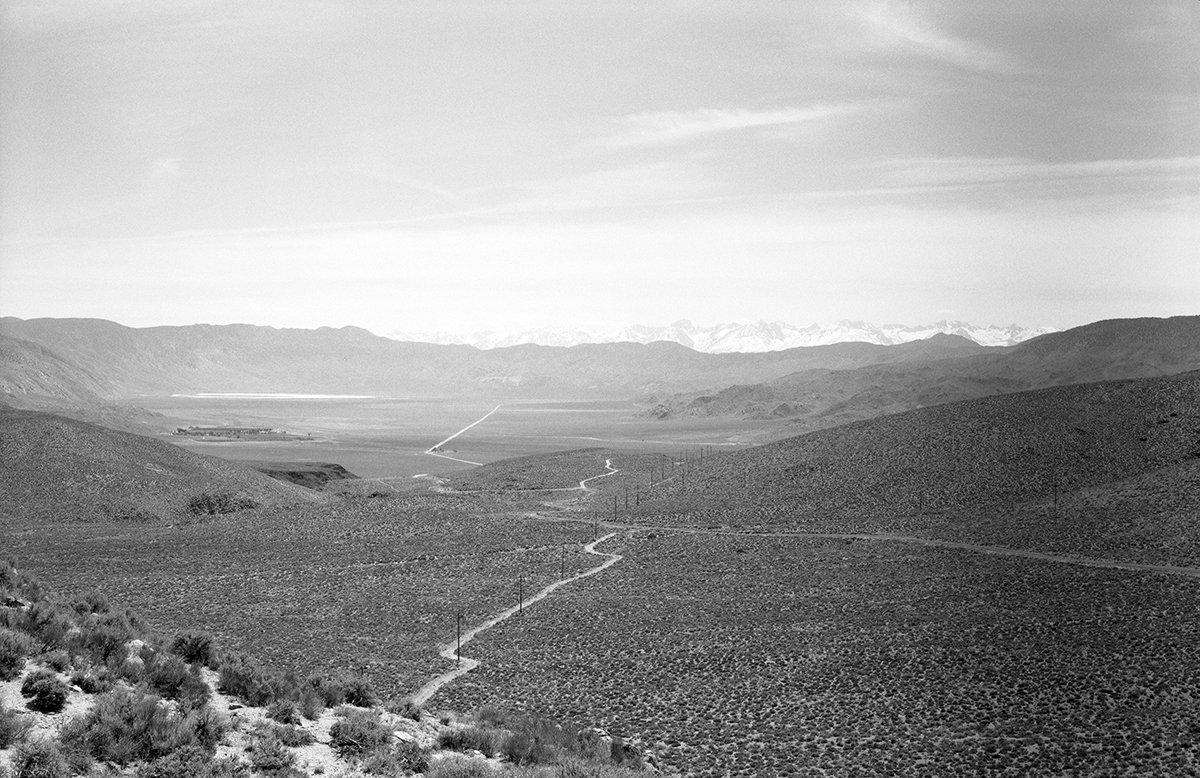
The basic premise of the microcollege is the idea that these two worlds might be reconciled, and its most famous proof of concept is Deep Springs College. Arguably the most enduring educational experiment in American history, the school was established in 1917 and still exists today. It was founded by L. L. Nunn (1853-1925), who made a name for himself out West by bringing hydroelectric power to the mining industry, a process he pioneered when he electrified the town of Telluride, Colorado. While developing industrial-education programs for his hydroelectric engineers, he corresponded with Progressive educators like John Dewey and Alexander Meiklejohn and, motivated by the questions and problems of an increasingly industrial age, left the industry behind to focus full-time on education. His method evolved into the Telluride Association and eventually Deep Springs, a two-year liberal arts college, cattle ranch and alfalfa farm in the high desert of the eastern Sierras. Deep Springs is free for all students, in the belief that the opportunity will spur them to see themselves as producers, rather than consumers, of their education. The only long-standing class is Public Speaking; the rest are a balance of humanities, social sciences and natural sciences chosen by the student-run Curriculum Committee. Students work twenty hours per week minimum in a rotation of labor positions necessary to the basic operation of the college: milking cows, moving irrigation lines, cooking and cleaning. It serves 26 students at a time, thirteen per class. Until 2018, the student body was all male.
After a century without imitation, a diverse field of Nunnian institutions have emerged: the microcollege movement. It includes Thoreau College, a gap-year and summer program in Viroqua; Outer Coast, a two-year undergraduate program in Sitka, Alaska, where I worked for four years starting in 2019; Tidelines Institute, a gap-semester program and my host in Gustavus, formerly a “Deep Springs College for women” known as the Arete Project, back when female applicants were not admitted; Lamplight, a summer program for middle and high school students in northern Alabama; Gull Island Institute, which runs college partnership programs and a summer program for late-stage undergraduates in the Cape and Islands region of Massachusetts; and the Telluride Association, which oversees two Nunn-affiliated houses at Cornell and Michigan and a summer program for high school students. Arguably, it also includes many other institutions without a self-described affiliation with Nunn, like Bard College’s community-based “microcollege” program for working adults in New York. Jacob Hundt, a Deep Springer who grew up on a farm in Viroqua and started Thoreau College in 2015, has done the most work to document, publicize and name this movement as a movement. A perusal of the subjects covered on his Microcollege podcast shows the breadth of possible approaches: anthroposophy, Bildung, community singing, biodynamic agriculture.
Our summit at Arkadia, however, was a specifically Nunnian affair, the third such gathering since Deep Springs students first advocated for it in 2023. The first two had sought simply to take stock of the astonishing fact of a movement that had awoken, apparently overnight, from a hundred-year slumber. The third gathering, my first, mixed this earnest self-searching with a noticeably more organizational tone. The keynote speaker was L. Jackson Newell, a historian and former Deep Springs president, who wrote a biography of Nunn and has been among the strongest advocates for the propagation of what he calls “maverick colleges” like Deep Springs. Equal parts historical inquiry and strategic planning meeting, the microcolleges were searching their past for a viable future. We had come to Viroqua to ask what a Nunnian education entails, and to figure out why it had endured for so long at Deep Springs and the Telluride Houses but nowhere else. Why is it now that this model has begun to seem like such an appealing alternative?
●
When I was a college freshman in 2015, Deep Springs represented the opposite of everything I found baffling and alienating about my experience at Yale. After growing up in a midsize town in western Colorado—just north of Telluride, coincidentally, the part of Colorado that sent Lauren Boebert to Congress—I got an acceptance letter from Yale with a handwritten note from my admissions officer about how important my “rural perspective” would be on campus. Whether or not that might have been true, I left for New Haven with a chip on my shoulder and a determination to transcend what I perceived to be a world of rural dead ends: record drought, appropriated Native mascots, freak accidents, piles of sofas shot through with AR-15s. I graduated high school at the peak of the affirmative action era, when faith in meritocracy and social mobility had yet to fade and “plus-factor” identity-based admissions could help students like me make a case for themselves with the right mixture of stats, clubs and a compelling story. I was also on the cutting edge of the Hillbilly Elegy era, when the aesthetics of rural poverty and the political potency of rural backlash were only just beginning to burst through. I wrote my essay about the politics of sportfishing. Narratively, it all fit.
At Yale, that narrative began to fall apart. In the canonical humanities sequence that I enrolled in, I had no reference point for anything we read. After spending most of my summer trudging through Herodotus and Homer, seminars flew by in a haze of SAT vocab and debate-champion-style spreading. The labor that I did on campus bore little relation to the world or to other people. My scholarship required a “student income contribution,” a lesson in the dignity of work that my more affluent peers somehow never needed to learn, imparted through a series of absurd and unnecessary part-time jobs: delivering printed forms that could have been emailed, doing dining-hall inventory, answering phones. Once, I got trapped in a storage closet right before a scholarship dinner I was supposed to attend. I hadn’t applied to Deep Springs originally, but I spent much of my first year poring over the website, imagining another escape.
I never took the leap. Instead, I found enough footholds in that bleak first year to start to build a small world for myself on campus. I made friends; I got to know my classmates, coworkers, mentors. But we didn’t have a shared project, or even much of a shared sense of reality. I, like everyone else, had my small vehicle of interests, career goals and stories about myself. My responsibilities were only to Yale and to myself, and my power was only to apply, and apply, and apply again: summer internships, secret societies, fellowships and so on.
My senior year, I did a research project on rural college aspirations, trying to figure out why liberal education wasn’t more available, or more desired, by rural students. But I began to wonder whether the better question was: Should liberal education as it currently exists be more available to rural students? Is the promise of social and economic mobility worth the trade-offs: the frayed connections with one’s homeplace, the loss of a world held in common with others?
By the time I graduated, I came to the now-familiar conclusion that my university, like many others, had abandoned its commitment to helping students make shared meaning of the world. Instead, the balkanization of the disciplines, the penetration of investment banking and consulting into career offices, the failure to train or reward professors for their teaching and, most importantly, students’ own consumer-driven assumptions about college had hollowed out the promise of liberal education. That is a problem not just for rural students, but for everyone, as a committee of Yale professors argued in their April report on declining trust in American universities. “Many students, faculty, and experts expressed the desire for a shared intellectual experience,” they wrote, “that would give students across the university something to talk about, argue over, and build upon together. In our fractured era, the absence of such common ground is dearly felt.”
For the Nunnians, the critique of higher education is built in to the project: not only is higher education possible without the stadiums, student-affairs professionals and real-estate offices, it’s being done, every day, in the necessary work of running an institution under the most extreme conditions. The stakes of running a microcollege have always been high; it’s because of those stakes that the work has meaning. The consequences of missing an irrigation shift or blowing off a reading are real and immediate, as are choosing the right faculty and raising money to keep the lights on. But for the nascent microcollege movement, those stakes are often uncomfortably abstract. The question then becomes: Is the first responsibility of the movement to export Nunnian ideas to existing colleges and universities, or to secure and nurture the institutions that have already proven viable? Can its critique grow in force if it is only evident to the students and teachers who’ve bought into it?
●
Deep Springs was borne of a historical moment when the nature of American labor was undergoing a radical transformation. The industrialization of American society at the turn of the twentieth century—the acceleration of movement by rail, the scientific management of every aspect of life, the proletarianization of workers—ushered in an era of alienation from previous notions of place, community and history. The famous census of 1890 was both a record and product of its age: the first to declare the frontier “closed” and the first to be counted using an electric “tabulating machine,” a precursor to the computer. It’s no wonder that the social and technological upheaval of the late nineteenth century produced such a fervent search for spiritual meaning: Methodism, Pentecostalism, Protestant missions in Indian Country, the Ghost Dance religion.
The idealism and religiosity of Nunn’s vision, akin to the spiritual movements of his day, was expressed foremost through the landscapes of the Deep Springs Valley. In one of Nunn’s most famous letters to the student body, he wrote,
The desert has a deep personality; it has a voice; and God speaks through its personality and voice … Gentlemen, “For what came ye into the wilderness?” Not for conventional scholastic training; not for ranch life; not to become proficient in commercial or professional pursuits for personal gain. You came to prepare for a life of service, with the understanding that superior ability and generous purpose would be expected of you, and this expectation must be justified. … The desert speaks. Those who listen will hear the purpose, philosophy and ethics of Deep Springs.
For Nunn, education should bring us into contact with what is real about ourselves and humanity broadly: the labor required to sustain life, the creative work that makes the world durable and the political action required to effect change in the world. Hannah Arendt called the appropriate balance of these activities the vita activa, the activity which necessitates thinking and vice versa.
Interwar projects like Black Mountain College, Bennington College or the Experimental College at the University of Wisconsin-Madison adopted similar, though less ascetic, models of education, which likewise sought to honor all modes of human life and activity as worthy of dignity and examination and saw self-formation as an aim rather than a byproduct. But to another set of interwar reformers, who have arguably influenced the microcollege movement as much as Nunn, these liberal experiments failed to address the reality of those whose lives were most dislocated by the industrial transformation of the era. According to these critics, education should bring us into contact not just with the universal but also with what is real about our specific social, political and economic condition. This view took root as the idea of an American folk-school movement.
The folk-school movement, unlike the cosmopolitanism of the experimental colleges of the same era, was essentially rural and regional. Inspired by the work of the Danish philosopher and minister Nikolai Frederick Severin Grundtvig, the Danish folkehøjskole was a kind of spiritual engine for the Danish agricultural revival in the second half of the nineteenth century. Grundtvig’s idea was to restore the connection between education and everyday life, to cultivate a love of learning among the masses that would instill pride in themselves and their native communities, and in so doing lay the foundation for a flourishing social democracy. The schools recruited small groups of young adults from the countryside, taught them works of Danish literature and history without formal grades or examinations, and guided them in daily rituals in cooperative living, including singing, gymnastics and social dancing. To American onlookers, the folk schools were a revelation. The Bureau of Education dispatched a team of researchers to produce reports on the schools, and even Booker T. Washington, always shrewd in his cultivation of Progressive philanthropists, visited and wrote about them. In 1927, one observer called Denmark “the crossroads of the progressives’ world.”
Yet translating them into an American context would prove difficult. Lacking a comparable socialist politics, many of the folk schools that cropped up in the U.S. in the 1920s were pure cultural revival rather than engines of economic development, consciousness raising or liberal learning. One of the more promising offshoots was imported to the States by the Danish teacher Soren A. Mathiasen, who started what he called a “people’s college” in the Poconos in 1923. Mathiasen’s school did not shy away from the full meaning of folk: cooperative living, a broad liberal arts curriculum, the discussion of the immediate social and economic problems the students faced. By the beginning of the 1930s Mathiasen had attracted the veritable who’s who of educators, including John Dewey and W. E. B. Du Bois, who wrote, “I am tremendously interested in the story of the Peoples’ College as you outlined the other night. … I am convinced that there is a Light and a Way here for the American Negro and I am not sure but what I want to start an experiment of the sort myself.” Mathiasen dreamed of assembling a “chain” of people’s colleges that would stretch out across the United States.
The people’s college model of education, community development and collective life was later co-opted by radical organizers from the labor and civil rights movements, and its influence can be seen in New Deal public-works projects, back-to-the-land-style resettlements and rural experiments like the planned Arthurdale community in West Virginia. Yet even the most ardent advocates for the people’s colleges questioned whether hyperlocal higher education could succeed and endure. Myles Horton, the founder of the radical Highlander Folk School in Tennessee, was on his own sojourn to Denmark when he scribbled in his journal, “Is a school like this possible without a tide or is there a tide in it?” At Highlander and other schools like it, reformers struggled to reconcile the schools’ broader political-educational aims with their identity as grassroots institutions, and the idea of “folk” culture could only do so much to hold it all together. The chain of American people’s colleges never came to fruition.
But in the world of the microcolleges, as in educational radicalism generally, there are never really periods of decline—only afterlives, genealogies, echoes.
●
The summit in Viroqua had the air of a family reunion, hobbyist convention or emotional support group—the relief and wonder of finally, after all this time, meeting other people who know exactly what you’re talking about when you mention the time the staff building burned down or the student body voted to take an indefinite vow of silence. Sessions ranged from the tactical (shared governance, student recruitment, accreditation) to the pedagogical (tech policies, philosophies of risk and failure, the surprisingly contentious issue of the daily schedule). I joined a psychodrama exercise called the Theater of the Oppressed, in which students and staffulty1 acted out real-life conflicts each of their institutions had encountered and tried out new configurations and uses of power. A student from the audience could call out “pause!” to stop an interaction on stage, replace the role of the staff member and act out the situation as they would rather see it handled. Staff could do the same for students. In that way, it was a conference for students and staffulty both, each comparing notes from the field.
One morning, we held a plenary session in front of an old chalkboard to discuss how we might begin to define a Nunnian education. Justin Reynolds of the Gull Island Institute fielded contributions from the audience, which included “training for change,” “responsibility with consequences,” “leadership and self-advocacy,” “failure by design” and “leadership and service to humanity.” One student from Outer Coast offered the idea that “place affects us.” A Deep Springer tried out “centering yourself in vastness.” Everyone agreed on what Nunn once called “an abundance of heart.”
The closest the Nunnian paradigm gets to a formal definition are the “three pillars” of a Deep Springs education: academics, labor and self-governance. The variations on these pillars adopted by the microcolleges attest to how they’ve hybridized Nunnian ideas with other intellectual traditions: Outer Coast has “service and labor,” reflecting its orientation to its island community and the historic campus it is situated on. Thoreau substitutes self-governance for “community” and adds “nature” and “art,” a reflection of its roots in transcendentalism, anthroposophy and the Danish folk-school model. Tidelines might be truest to Nunn’s original understanding of labor and its relationship to isolation: students live on a former homestead just southeast of the longest stretch of continuous wilderness in the country, grow much of their own food and build most of their campus.
But after hours of brainstorming and debate, we were no closer to consensus about what the core of Nunnian education really was. The pillars are more of a description than a theory, which is probably why explanations of Nunnian education work best through example. In his keynote address, Newell told a story about the summer he spent fighting fires in Crater Lake National Park. Though he wasn’t a carpenter—he was only a college student—the park superintendent tasked him with building a boathouse on an island. The superintendent gave him a crew, access to a library and the belief that he was up to the task. What the superintendent didn’t give him was supervision. “That was a Nunnian education,” Newell said. Integrated, real-world projects that are beyond one’s skills but not one’s capacity. Daniel Waid Marshall, a teacher from the Lamplight program in Alabama, described something similar: it was “a place to become powerful.”
●
When I first moved to Sitka, Alaska, in 2019, three months after graduating from Yale, I was handed a knife and a set of rubber bibs and asked if I could help “tip” black-cod heads. Black cod is a buttery deep-sea fish from the North Pacific, a common catch around Sitka. It isn’t worth the processors’ time to extract the delicate cuts of meat from under the fish’s mandible, but for locals tipping on their own time, a blue tote of heads is the highest of gifts. The heads were oil-slick and pungent, the tips suctioned deep into the cartilage. It was hot, early September, and waves of steam rose off our rubber gloves. Thousands of clumsy cuts later, we buried the skulls in the sunflower garden and walked home with freezer bags full of white gold. And so I became a little more powerful.
So, too, when the search-and-rescue team needed help finding an overdue hiker on Mount Verstovia. Or when the radio station needed a board member. Or when the theater needed a voice actor. Or when a subsistence fisherman came to the harbor with a tote of herring roe—a sacred food for the Tlingit—and needed a small army to clean them. Or when I was the overdue hiker. Or when someone showed me how to rebuild a kayak, or steer a skiff, or teach a class, or hunt a deer, or run a hydraulic lift, or pronounce something in Tlingit, or care for an elder, or self-arrest on a frozen volcano. Because I was needed, and because I needed others, I became powerful. Somewhere in this web of relations and kinship was a school, and that school was Outer Coast.
Outer Coast was founded in 2015 by Sitkan, Yale alum and former Alaska state representative Jonathan Kreiss-Tomkins. I met him for coffee in 2018, when I was still a senior at Yale and Outer Coast had just run its first summer program for high school students. I was hired as a “factotum,” a wearer of many hats. Our small team of five recent college grads hired faculty, recruited students, designed the curriculum, lived grant to grant. Now Outer Coast is a two-year undergraduate institution with thirty to forty students at a time and a staffulty of between fifteen and twenty people.
Though Outer Coast began as an effort to build on the success of Deep Springs, it was clear from the outset that the place itself necessitated a different kind of institution. Sitka’s Sheldon Jackson College, the oldest educational institution in Alaska and a former missionary boarding school for Native children, went bankrupt in 2007. The school had enrolled generations of Alaskans, especially Alaska Natives, and left behind a thirteen-acre campus moldering in the rain until a summer arts camp took over the buildings and their restoration in 2011. Four years later, Outer Coast proposed renting the campus during the academic year. It was never just about propagating Deep Springs; it was also about bringing higher education back to Sitka, and in doing so to reimagine higher education for a national audience.
While it might be possible and even pedagogically useful to imagine the Deep Springs Valley as terra nullius (despite thousands of years of Paiute presence there), Outer Coast was always inextricable from the histories of the place it was founded and the island community it was situated in. A constant undercurrent of those early years was a question about what it meant to “start over” with higher education on the Sheldon Jackson campus. Early faculty like the Tlingit-language scholar X¯ ’unei Lance Twitchell would compare the pedagogy and aesthetics of the infamous Carlisle Indian Industrial School to the former Sitka Industrial and Training School, and Yeidikook’áa Dionne Brady-Howard (now chair of Indigenous Studies and the Tlingit Tribal Council) taught evening courses on Alaska Native history and governance. We supported Alaska Native language learning during the pandemic by offering online courses in Tlingit and other Native languages of the region. Still, it felt uncomfortably familiar for a group of Ivy League alums to travel to the far reaches of America to “bring education” to the region.
In spring 2022, as planning for the two-year undergraduate program was ramping up, we waded fully into the tensions underlying the project and built out of them a viable curricular vision. Now, all students read classics of Tlingit oral literature and study the tidal ecology of southeast Alaska. Alongside local teachers and mentors, they learn Tlingit language, arts, song and dance. The idea was that by receiving an education in a deep tradition that is not necessarily their own—about half the student body comes from Alaska, the rest from the lower 48—students would come away with a renewed sense of their own traditions and lineages, and build the skills and confidence to become students and citizens of the places they belong to. The pedagogy that developed at Outer Coast was different from that at Deep Springs because the place is different. In Sitka, part of the job was to give students a conduit to the place as it is and following what is already beautiful and nourishing about living there.
Back at the chalkboard in Arkadia, Reynolds posed the two questions that define Gull Island’s curricular approach: “What makes a place habitable? What does it mean to inhabit it well?” We’d been grasping all weekend long for a definition of the movement broad enough to encompass its differences, yet precise enough to capture its ethos. We never settled on one. But these questions returned us to the universal questions inherent in the specificity of the places we reside. In each of their particular contexts, the microcolleges are also asking: What makes life possible? How should we live?
The microcolleges are attempting to revitalize two distinct visions of education grounded in overlapping traditions of Progressive thought: Nunn’s work college and the folk school. One emphasizes the universality of the human condition, and the other, our rootedness—in places, in social and economic conditions, in history. For both, education is that which increases our power to bring forth what is vital in us and in the world, the life of things.
When the word crisis is invoked in conversations about higher education today, it’s usually as a prelude to an endless list of crises too enormous to imagine; the metacrisis consumes the actual crisis. The representatives from Tidelines identified four of them at the conference: governance and democracy, justice and equality, climate and environment, and meaning and purpose. These crises are no less present in Sitka: the king salmon are getting smaller, the community is politically unequipped to prevent private corporations from selling the town to cruise ships, the sac-roe industry is waging a war on the last remaining herring fishery in the region, and the boarding-school campus which was the epicenter of the movement to erase Alaska Native languages and cultures sits in the middle of town. But as important as it is to conceptualize these problems as manifestations of interlocking crises, ultimately it is more alienating if we are unable to deal with them as tangible, material, relational problems. In Sitka, there is no metacrisis. Outer Coast is not a metaphor. There are only crises, and people to work them out with.
●
On our last day in Viroqua, the temperature hovering ten degrees below zero, Jacob Hundt took us up to his family farm for dinner with his father, Vince. Vince lives on 280 acres in the Coon Valley, where he raises grass-fed beef, pastured pork and chickens, maple syrup, and hay and corn for animal feed. Jacob’s mom is buried in a fenced-off plot in the cattle pasture. Since she died, Vince has been teaching himself how to cook. He made us a gorgeous beef stew and a loaf of bread that ballooned up over the edges of the pan. He had all the old recipes, but still he’d been calling friends and relatives all day to get their advice on the particulars. After showing us a nearly identical photo of his wife’s bread, he told us he was disappointed his didn’t rise like hers.
“Why not learn everything you need at home?” Vince asked us. “What are the folks in Madison going to teach you anyway?” Vince, who grew up on a dairy farm as the tenth of thirteen children, tried college at UW-Madison but realized that the life he was living on the farm was the life that all the rich folks around him coveted. Though he was just starting to get interested in his classes, he decided during a backpacking trip in Europe that it was time to quit school and “retire” to the farm.
Watching Vince slice each of us a thick slab of bread, it occurred to me that I was being given another microcosm of the active life: the labor to live from and enrich the land, the work to make something in accordance with a known tradition, and the action with others to determine the meaning of that tradition in the present. My work has surrounded me with people who have made themselves students of their own places and their own histories. But if the goal of the microcollege is to foster a connection to where we are already, why go anywhere else?
It’s the essential American idea that our supposedly empty hinterlands would serve as either our safety valve or our salvation. “Out there,” we might revitalize our institutions, our purpose, our manhood, whatever you’d like. Tanner Horst, the campus director at Tidelines and a craftsman in his own right, wondered during our chalkboard session, “Are we antiquarian? Are we outside of time? Are we rural?”
I wonder if the promise of the microcollege movement might be in the thoughtful transit between times and places: the search for a world “out there” that brings our attention to the fact that we’ve been living in the real world all along. Kenneth Roemer, in a piece on his experience teaching utopias to undergraduates at the University of Texas, Arlington, describes the following interaction with a student:
I asked the class to write a paper in response to a hypothetical situation: if you had unlimited financial resources and total local, state, and national support, how would you transform Arlington, Texas into utopia? A few minutes after the class had begun to write, one of the students—a mature and intelligent woman in her late thirties—approached my desk. She seemed embarrassed, even upset. She asked, “What if I believe that Arlington, Texas is utopia?”
Sitka, Viroqua, Gustavus—what if these places are already utopias, just like the places we come from? What if the revitalization of our institutions, our democracy, our imagination, is less “out there” than “in here,” in already-existing places that teach us that work might not just be making a living but, instead, what we create and sustain with others?
A common refrain among the Nunnians is “one microcollege in every state.” I think this is a fine goal, but I doubt that they will be so evenly distributed. Microcolleges should exist wherever a community believes one should exist. A natural place to look for these communities is in towns that have lost their local colleges in the initial tip over the much-feared “demographic cliff.” One bellwether is Ashland, Wisconsin, which had two representatives in attendance at the summit in Viroqua. For 133 years, Ashland’s Northland College was a liberal arts school on the shore of Lake Superior with a significant cultural and economic footprint in the Great Lakes region. It shuttered in 2025 due to enrollment and funding challenges. Former staff and faculty, inspired by Thoreau College to the southwest, took an interest in reopening their institution as a microcollege. After all, the campus is still there, many of the people are still there—why not try to make something of it?
Practically, in a system built, however shakily, on the legitimacy of credentials and merit, the microcolleges will have to engage with traditional colleges and universities to survive. The only independently accredited microcollege is Deep Springs. Most everyone else maintains course-crediting partnerships with established universities but have stopped short of full institutional “incubation,” due to shoestring budgets, limited administrative capacity and regulatory roadblocks that make accrediting new institutions exceedingly difficult.
Often, people who write about Deep Springs wonder how to integrate Nunnian ideas into existing institutions: bringing back cooperative housing, labor programs and the like. Some schools have attempted it, as in Newell’s restructuring of the Liberal Education program at the University of Utah. But there is a reason these programs haven’t gone mainstream: they’re too risky for the administrative bureaucracy and unappealing to students who have already accepted their roles as consumers. If starting an independently accredited liberal arts college is nearly impossible today and radically reforming existing ones is unthinkable, then the only path forward is to find a way to make microcolleges attractive to existing institutions and to legitimate them to the students who are interested but too cautious to attend. Tidelines, for example, frames its semester-long program as a kind of domestic study abroad, for which students can apply their college’s financial aid in the same way they would for an international program. Gull Island runs courses in collaboration with faculty at traditional universities. Deep Springs relies on a long history of successful transfers with elite private schools. But there’s no reason a microcollege couldn’t partner with regional or state institutions, like Outer Coast has with the University of Alaska.
Both the microcolleges and traditional higher education would benefit from the interchange of quality students and faculty. Maybe, over decades, these connections could drive a paradigm shift in higher education. For now, the microcolleges furnish spaces for those who recognize that higher education isn’t working but can’t imagine how it could be otherwise. Which was exactly the feeling of unease that I had as a freshman at Yale, vaguely aware that I wanted to be somewhere else but, having won the elite-admissions game, finding it impossible to risk throwing it away.
It remains to be seen whether the microcollege movement can build momentum without some formal structure, or whether its strength will be found in its fluidity and diversity of forms. By the end of the weekend in Viroqua we had decided on a name (the Nunnian Consortium), started a Google Drive, and made a commitment to meet again. For a collection of institutions obsessed with appropriate rules of order and prone to marathon discussion sessions, this was no small feat. I walked away, as Reynolds said, amazed by the “sheer existence of a cause that I identify with.”
Art credit: Outer Coast; Karl French, The view west with Deep Springs College and the Sierra Nevadas, 2008. Courtesy of the artist.


This past January, I traveled to a small town in Wisconsin’s Driftless region, the southwest corner of the state the glaciers missed, to join a summit of representatives from the far-flung universe of “microcolleges.” The host institution, Thoreau College, was one of several that had spent the last decade quietly forging radical alternatives to traditional higher education in out-of-the-way places like Viroqua, Wisconsin. Our conference venue was, appropriately, a community theater called Arkadia. I was in the company of students, teachers, founders and researchers, hailing from as far away as the temperate rainforests of southeast Alaska, the stark desert of the Great Basin and the hill country of southern Appalachia. We wore every shade of brown, took the day’s dishes in shifts and sang songs in rounds. In an adjacent room, the town of Viroqua was holding their fourth annual “Bardathon,” a week-long 24/7 reading of the entire corpus of Shakespeare, and a parade of bearded men filed in and out to sit for their shifts while we conducted our sessions. Occasionally, some of us would shuffle in from the blowing snow to read for a few acts. I read most of Twelfth Night one evening and was thanked gratuitously for my service.
In the small, self-referential world of the microcolleges, everything that happens is a microcosm. A few years out from undergrad, I was on my way to a “Rethinking Democracy and Education” conference hosted by a microcollege in Gustavus, Alaska, when low-lying fog prevented our flight from landing and sent us back to Juneau. Undeterred, the organizers put us on charter fishing boats, where I found myself in a lurching aluminum cabin for three hours with the former chair of my undergraduate program at Yale. I was nauseated by the collapsing distance between two worlds: one, the immediate and material world of rural, isolated communities like Viroqua and Gustavus, and the other, the heady but no less vital world of liberal education and its stalwart defenders at places like Yale.
The basic premise of the microcollege is the idea that these two worlds might be reconciled, and its most famous proof of concept is Deep Springs College. Arguably the most enduring educational experiment in American history, the school was established in 1917 and still exists today. It was founded by L. L. Nunn (1853-1925), who made a name for himself out West by bringing hydroelectric power to the mining industry, a process he pioneered when he electrified the town of Telluride, Colorado. While developing industrial-education programs for his hydroelectric engineers, he corresponded with Progressive educators like John Dewey and Alexander Meiklejohn and, motivated by the questions and problems of an increasingly industrial age, left the industry behind to focus full-time on education. His method evolved into the Telluride Association and eventually Deep Springs, a two-year liberal arts college, cattle ranch and alfalfa farm in the high desert of the eastern Sierras. Deep Springs is free for all students, in the belief that the opportunity will spur them to see themselves as producers, rather than consumers, of their education. The only long-standing class is Public Speaking; the rest are a balance of humanities, social sciences and natural sciences chosen by the student-run Curriculum Committee. Students work twenty hours per week minimum in a rotation of labor positions necessary to the basic operation of the college: milking cows, moving irrigation lines, cooking and cleaning. It serves 26 students at a time, thirteen per class. Until 2018, the student body was all male.
After a century without imitation, a diverse field of Nunnian institutions have emerged: the microcollege movement. It includes Thoreau College, a gap-year and summer program in Viroqua; Outer Coast, a two-year undergraduate program in Sitka, Alaska, where I worked for four years starting in 2019; Tidelines Institute, a gap-semester program and my host in Gustavus, formerly a “Deep Springs College for women” known as the Arete Project, back when female applicants were not admitted; Lamplight, a summer program for middle and high school students in northern Alabama; Gull Island Institute, which runs college partnership programs and a summer program for late-stage undergraduates in the Cape and Islands region of Massachusetts; and the Telluride Association, which oversees two Nunn-affiliated houses at Cornell and Michigan and a summer program for high school students. Arguably, it also includes many other institutions without a self-described affiliation with Nunn, like Bard College’s community-based “microcollege” program for working adults in New York. Jacob Hundt, a Deep Springer who grew up on a farm in Viroqua and started Thoreau College in 2015, has done the most work to document, publicize and name this movement as a movement. A perusal of the subjects covered on his Microcollege podcast shows the breadth of possible approaches: anthroposophy, Bildung, community singing, biodynamic agriculture.
Our summit at Arkadia, however, was a specifically Nunnian affair, the third such gathering since Deep Springs students first advocated for it in 2023. The first two had sought simply to take stock of the astonishing fact of a movement that had awoken, apparently overnight, from a hundred-year slumber. The third gathering, my first, mixed this earnest self-searching with a noticeably more organizational tone. The keynote speaker was L. Jackson Newell, a historian and former Deep Springs president, who wrote a biography of Nunn and has been among the strongest advocates for the propagation of what he calls “maverick colleges” like Deep Springs. Equal parts historical inquiry and strategic planning meeting, the microcolleges were searching their past for a viable future. We had come to Viroqua to ask what a Nunnian education entails, and to figure out why it had endured for so long at Deep Springs and the Telluride Houses but nowhere else. Why is it now that this model has begun to seem like such an appealing alternative?
●
When I was a college freshman in 2015, Deep Springs represented the opposite of everything I found baffling and alienating about my experience at Yale. After growing up in a midsize town in western Colorado—just north of Telluride, coincidentally, the part of Colorado that sent Lauren Boebert to Congress—I got an acceptance letter from Yale with a handwritten note from my admissions officer about how important my “rural perspective” would be on campus. Whether or not that might have been true, I left for New Haven with a chip on my shoulder and a determination to transcend what I perceived to be a world of rural dead ends: record drought, appropriated Native mascots, freak accidents, piles of sofas shot through with AR-15s. I graduated high school at the peak of the affirmative action era, when faith in meritocracy and social mobility had yet to fade and “plus-factor” identity-based admissions could help students like me make a case for themselves with the right mixture of stats, clubs and a compelling story. I was also on the cutting edge of the Hillbilly Elegy era, when the aesthetics of rural poverty and the political potency of rural backlash were only just beginning to burst through. I wrote my essay about the politics of sportfishing. Narratively, it all fit.
At Yale, that narrative began to fall apart. In the canonical humanities sequence that I enrolled in, I had no reference point for anything we read. After spending most of my summer trudging through Herodotus and Homer, seminars flew by in a haze of SAT vocab and debate-champion-style spreading. The labor that I did on campus bore little relation to the world or to other people. My scholarship required a “student income contribution,” a lesson in the dignity of work that my more affluent peers somehow never needed to learn, imparted through a series of absurd and unnecessary part-time jobs: delivering printed forms that could have been emailed, doing dining-hall inventory, answering phones. Once, I got trapped in a storage closet right before a scholarship dinner I was supposed to attend. I hadn’t applied to Deep Springs originally, but I spent much of my first year poring over the website, imagining another escape.
I never took the leap. Instead, I found enough footholds in that bleak first year to start to build a small world for myself on campus. I made friends; I got to know my classmates, coworkers, mentors. But we didn’t have a shared project, or even much of a shared sense of reality. I, like everyone else, had my small vehicle of interests, career goals and stories about myself. My responsibilities were only to Yale and to myself, and my power was only to apply, and apply, and apply again: summer internships, secret societies, fellowships and so on.
My senior year, I did a research project on rural college aspirations, trying to figure out why liberal education wasn’t more available, or more desired, by rural students. But I began to wonder whether the better question was: Should liberal education as it currently exists be more available to rural students? Is the promise of social and economic mobility worth the trade-offs: the frayed connections with one’s homeplace, the loss of a world held in common with others?
By the time I graduated, I came to the now-familiar conclusion that my university, like many others, had abandoned its commitment to helping students make shared meaning of the world. Instead, the balkanization of the disciplines, the penetration of investment banking and consulting into career offices, the failure to train or reward professors for their teaching and, most importantly, students’ own consumer-driven assumptions about college had hollowed out the promise of liberal education. That is a problem not just for rural students, but for everyone, as a committee of Yale professors argued in their April report on declining trust in American universities. “Many students, faculty, and experts expressed the desire for a shared intellectual experience,” they wrote, “that would give students across the university something to talk about, argue over, and build upon together. In our fractured era, the absence of such common ground is dearly felt.”
For the Nunnians, the critique of higher education is built in to the project: not only is higher education possible without the stadiums, student-affairs professionals and real-estate offices, it’s being done, every day, in the necessary work of running an institution under the most extreme conditions. The stakes of running a microcollege have always been high; it’s because of those stakes that the work has meaning. The consequences of missing an irrigation shift or blowing off a reading are real and immediate, as are choosing the right faculty and raising money to keep the lights on. But for the nascent microcollege movement, those stakes are often uncomfortably abstract. The question then becomes: Is the first responsibility of the movement to export Nunnian ideas to existing colleges and universities, or to secure and nurture the institutions that have already proven viable? Can its critique grow in force if it is only evident to the students and teachers who’ve bought into it?
●
Deep Springs was borne of a historical moment when the nature of American labor was undergoing a radical transformation. The industrialization of American society at the turn of the twentieth century—the acceleration of movement by rail, the scientific management of every aspect of life, the proletarianization of workers—ushered in an era of alienation from previous notions of place, community and history. The famous census of 1890 was both a record and product of its age: the first to declare the frontier “closed” and the first to be counted using an electric “tabulating machine,” a precursor to the computer. It’s no wonder that the social and technological upheaval of the late nineteenth century produced such a fervent search for spiritual meaning: Methodism, Pentecostalism, Protestant missions in Indian Country, the Ghost Dance religion.
The idealism and religiosity of Nunn’s vision, akin to the spiritual movements of his day, was expressed foremost through the landscapes of the Deep Springs Valley. In one of Nunn’s most famous letters to the student body, he wrote,
For Nunn, education should bring us into contact with what is real about ourselves and humanity broadly: the labor required to sustain life, the creative work that makes the world durable and the political action required to effect change in the world. Hannah Arendt called the appropriate balance of these activities the vita activa, the activity which necessitates thinking and vice versa.
Interwar projects like Black Mountain College, Bennington College or the Experimental College at the University of Wisconsin-Madison adopted similar, though less ascetic, models of education, which likewise sought to honor all modes of human life and activity as worthy of dignity and examination and saw self-formation as an aim rather than a byproduct. But to another set of interwar reformers, who have arguably influenced the microcollege movement as much as Nunn, these liberal experiments failed to address the reality of those whose lives were most dislocated by the industrial transformation of the era. According to these critics, education should bring us into contact not just with the universal but also with what is real about our specific social, political and economic condition. This view took root as the idea of an American folk-school movement.
The folk-school movement, unlike the cosmopolitanism of the experimental colleges of the same era, was essentially rural and regional. Inspired by the work of the Danish philosopher and minister Nikolai Frederick Severin Grundtvig, the Danish folkehøjskole was a kind of spiritual engine for the Danish agricultural revival in the second half of the nineteenth century. Grundtvig’s idea was to restore the connection between education and everyday life, to cultivate a love of learning among the masses that would instill pride in themselves and their native communities, and in so doing lay the foundation for a flourishing social democracy. The schools recruited small groups of young adults from the countryside, taught them works of Danish literature and history without formal grades or examinations, and guided them in daily rituals in cooperative living, including singing, gymnastics and social dancing. To American onlookers, the folk schools were a revelation. The Bureau of Education dispatched a team of researchers to produce reports on the schools, and even Booker T. Washington, always shrewd in his cultivation of Progressive philanthropists, visited and wrote about them. In 1927, one observer called Denmark “the crossroads of the progressives’ world.”
Yet translating them into an American context would prove difficult. Lacking a comparable socialist politics, many of the folk schools that cropped up in the U.S. in the 1920s were pure cultural revival rather than engines of economic development, consciousness raising or liberal learning. One of the more promising offshoots was imported to the States by the Danish teacher Soren A. Mathiasen, who started what he called a “people’s college” in the Poconos in 1923. Mathiasen’s school did not shy away from the full meaning of folk: cooperative living, a broad liberal arts curriculum, the discussion of the immediate social and economic problems the students faced. By the beginning of the 1930s Mathiasen had attracted the veritable who’s who of educators, including John Dewey and W. E. B. Du Bois, who wrote, “I am tremendously interested in the story of the Peoples’ College as you outlined the other night. … I am convinced that there is a Light and a Way here for the American Negro and I am not sure but what I want to start an experiment of the sort myself.” Mathiasen dreamed of assembling a “chain” of people’s colleges that would stretch out across the United States.
The people’s college model of education, community development and collective life was later co-opted by radical organizers from the labor and civil rights movements, and its influence can be seen in New Deal public-works projects, back-to-the-land-style resettlements and rural experiments like the planned Arthurdale community in West Virginia. Yet even the most ardent advocates for the people’s colleges questioned whether hyperlocal higher education could succeed and endure. Myles Horton, the founder of the radical Highlander Folk School in Tennessee, was on his own sojourn to Denmark when he scribbled in his journal, “Is a school like this possible without a tide or is there a tide in it?” At Highlander and other schools like it, reformers struggled to reconcile the schools’ broader political-educational aims with their identity as grassroots institutions, and the idea of “folk” culture could only do so much to hold it all together. The chain of American people’s colleges never came to fruition.
But in the world of the microcolleges, as in educational radicalism generally, there are never really periods of decline—only afterlives, genealogies, echoes.
●
The summit in Viroqua had the air of a family reunion, hobbyist convention or emotional support group—the relief and wonder of finally, after all this time, meeting other people who know exactly what you’re talking about when you mention the time the staff building burned down or the student body voted to take an indefinite vow of silence. Sessions ranged from the tactical (shared governance, student recruitment, accreditation) to the pedagogical (tech policies, philosophies of risk and failure, the surprisingly contentious issue of the daily schedule). I joined a psychodrama exercise called the Theater of the Oppressed, in which students and staffulty1A Nunnianism meant to convey that staff, from farm managers to campus caretakers, are as much teachers as are the professors. acted out real-life conflicts each of their institutions had encountered and tried out new configurations and uses of power. A student from the audience could call out “pause!” to stop an interaction on stage, replace the role of the staff member and act out the situation as they would rather see it handled. Staff could do the same for students. In that way, it was a conference for students and staffulty both, each comparing notes from the field.
One morning, we held a plenary session in front of an old chalkboard to discuss how we might begin to define a Nunnian education. Justin Reynolds of the Gull Island Institute fielded contributions from the audience, which included “training for change,” “responsibility with consequences,” “leadership and self-advocacy,” “failure by design” and “leadership and service to humanity.” One student from Outer Coast offered the idea that “place affects us.” A Deep Springer tried out “centering yourself in vastness.” Everyone agreed on what Nunn once called “an abundance of heart.”
The closest the Nunnian paradigm gets to a formal definition are the “three pillars” of a Deep Springs education: academics, labor and self-governance. The variations on these pillars adopted by the microcolleges attest to how they’ve hybridized Nunnian ideas with other intellectual traditions: Outer Coast has “service and labor,” reflecting its orientation to its island community and the historic campus it is situated on. Thoreau substitutes self-governance for “community” and adds “nature” and “art,” a reflection of its roots in transcendentalism, anthroposophy and the Danish folk-school model. Tidelines might be truest to Nunn’s original understanding of labor and its relationship to isolation: students live on a former homestead just southeast of the longest stretch of continuous wilderness in the country, grow much of their own food and build most of their campus.
But after hours of brainstorming and debate, we were no closer to consensus about what the core of Nunnian education really was. The pillars are more of a description than a theory, which is probably why explanations of Nunnian education work best through example. In his keynote address, Newell told a story about the summer he spent fighting fires in Crater Lake National Park. Though he wasn’t a carpenter—he was only a college student—the park superintendent tasked him with building a boathouse on an island. The superintendent gave him a crew, access to a library and the belief that he was up to the task. What the superintendent didn’t give him was supervision. “That was a Nunnian education,” Newell said. Integrated, real-world projects that are beyond one’s skills but not one’s capacity. Daniel Waid Marshall, a teacher from the Lamplight program in Alabama, described something similar: it was “a place to become powerful.”
●
When I first moved to Sitka, Alaska, in 2019, three months after graduating from Yale, I was handed a knife and a set of rubber bibs and asked if I could help “tip” black-cod heads. Black cod is a buttery deep-sea fish from the North Pacific, a common catch around Sitka. It isn’t worth the processors’ time to extract the delicate cuts of meat from under the fish’s mandible, but for locals tipping on their own time, a blue tote of heads is the highest of gifts. The heads were oil-slick and pungent, the tips suctioned deep into the cartilage. It was hot, early September, and waves of steam rose off our rubber gloves. Thousands of clumsy cuts later, we buried the skulls in the sunflower garden and walked home with freezer bags full of white gold. And so I became a little more powerful.
So, too, when the search-and-rescue team needed help finding an overdue hiker on Mount Verstovia. Or when the radio station needed a board member. Or when the theater needed a voice actor. Or when a subsistence fisherman came to the harbor with a tote of herring roe—a sacred food for the Tlingit—and needed a small army to clean them. Or when I was the overdue hiker. Or when someone showed me how to rebuild a kayak, or steer a skiff, or teach a class, or hunt a deer, or run a hydraulic lift, or pronounce something in Tlingit, or care for an elder, or self-arrest on a frozen volcano. Because I was needed, and because I needed others, I became powerful. Somewhere in this web of relations and kinship was a school, and that school was Outer Coast.
Outer Coast was founded in 2015 by Sitkan, Yale alum and former Alaska state representative Jonathan Kreiss-Tomkins. I met him for coffee in 2018, when I was still a senior at Yale and Outer Coast had just run its first summer program for high school students. I was hired as a “factotum,” a wearer of many hats. Our small team of five recent college grads hired faculty, recruited students, designed the curriculum, lived grant to grant. Now Outer Coast is a two-year undergraduate institution with thirty to forty students at a time and a staffulty of between fifteen and twenty people.
Though Outer Coast began as an effort to build on the success of Deep Springs, it was clear from the outset that the place itself necessitated a different kind of institution. Sitka’s Sheldon Jackson College, the oldest educational institution in Alaska and a former missionary boarding school for Native children, went bankrupt in 2007. The school had enrolled generations of Alaskans, especially Alaska Natives, and left behind a thirteen-acre campus moldering in the rain until a summer arts camp took over the buildings and their restoration in 2011. Four years later, Outer Coast proposed renting the campus during the academic year. It was never just about propagating Deep Springs; it was also about bringing higher education back to Sitka, and in doing so to reimagine higher education for a national audience.
While it might be possible and even pedagogically useful to imagine the Deep Springs Valley as terra nullius (despite thousands of years of Paiute presence there), Outer Coast was always inextricable from the histories of the place it was founded and the island community it was situated in. A constant undercurrent of those early years was a question about what it meant to “start over” with higher education on the Sheldon Jackson campus. Early faculty like the Tlingit-language scholar X¯ ’unei Lance Twitchell would compare the pedagogy and aesthetics of the infamous Carlisle Indian Industrial School to the former Sitka Industrial and Training School, and Yeidikook’áa Dionne Brady-Howard (now chair of Indigenous Studies and the Tlingit Tribal Council) taught evening courses on Alaska Native history and governance. We supported Alaska Native language learning during the pandemic by offering online courses in Tlingit and other Native languages of the region. Still, it felt uncomfortably familiar for a group of Ivy League alums to travel to the far reaches of America to “bring education” to the region.
In spring 2022, as planning for the two-year undergraduate program was ramping up, we waded fully into the tensions underlying the project and built out of them a viable curricular vision. Now, all students read classics of Tlingit oral literature and study the tidal ecology of southeast Alaska. Alongside local teachers and mentors, they learn Tlingit language, arts, song and dance. The idea was that by receiving an education in a deep tradition that is not necessarily their own—about half the student body comes from Alaska, the rest from the lower 48—students would come away with a renewed sense of their own traditions and lineages, and build the skills and confidence to become students and citizens of the places they belong to. The pedagogy that developed at Outer Coast was different from that at Deep Springs because the place is different. In Sitka, part of the job was to give students a conduit to the place as it is and following what is already beautiful and nourishing about living there.
Back at the chalkboard in Arkadia, Reynolds posed the two questions that define Gull Island’s curricular approach: “What makes a place habitable? What does it mean to inhabit it well?” We’d been grasping all weekend long for a definition of the movement broad enough to encompass its differences, yet precise enough to capture its ethos. We never settled on one. But these questions returned us to the universal questions inherent in the specificity of the places we reside. In each of their particular contexts, the microcolleges are also asking: What makes life possible? How should we live?
The microcolleges are attempting to revitalize two distinct visions of education grounded in overlapping traditions of Progressive thought: Nunn’s work college and the folk school. One emphasizes the universality of the human condition, and the other, our rootedness—in places, in social and economic conditions, in history. For both, education is that which increases our power to bring forth what is vital in us and in the world, the life of things.
When the word crisis is invoked in conversations about higher education today, it’s usually as a prelude to an endless list of crises too enormous to imagine; the metacrisis consumes the actual crisis. The representatives from Tidelines identified four of them at the conference: governance and democracy, justice and equality, climate and environment, and meaning and purpose. These crises are no less present in Sitka: the king salmon are getting smaller, the community is politically unequipped to prevent private corporations from selling the town to cruise ships, the sac-roe industry is waging a war on the last remaining herring fishery in the region, and the boarding-school campus which was the epicenter of the movement to erase Alaska Native languages and cultures sits in the middle of town. But as important as it is to conceptualize these problems as manifestations of interlocking crises, ultimately it is more alienating if we are unable to deal with them as tangible, material, relational problems. In Sitka, there is no metacrisis. Outer Coast is not a metaphor. There are only crises, and people to work them out with.
●
On our last day in Viroqua, the temperature hovering ten degrees below zero, Jacob Hundt took us up to his family farm for dinner with his father, Vince. Vince lives on 280 acres in the Coon Valley, where he raises grass-fed beef, pastured pork and chickens, maple syrup, and hay and corn for animal feed. Jacob’s mom is buried in a fenced-off plot in the cattle pasture. Since she died, Vince has been teaching himself how to cook. He made us a gorgeous beef stew and a loaf of bread that ballooned up over the edges of the pan. He had all the old recipes, but still he’d been calling friends and relatives all day to get their advice on the particulars. After showing us a nearly identical photo of his wife’s bread, he told us he was disappointed his didn’t rise like hers.
“Why not learn everything you need at home?” Vince asked us. “What are the folks in Madison going to teach you anyway?” Vince, who grew up on a dairy farm as the tenth of thirteen children, tried college at UW-Madison but realized that the life he was living on the farm was the life that all the rich folks around him coveted. Though he was just starting to get interested in his classes, he decided during a backpacking trip in Europe that it was time to quit school and “retire” to the farm.
Watching Vince slice each of us a thick slab of bread, it occurred to me that I was being given another microcosm of the active life: the labor to live from and enrich the land, the work to make something in accordance with a known tradition, and the action with others to determine the meaning of that tradition in the present. My work has surrounded me with people who have made themselves students of their own places and their own histories. But if the goal of the microcollege is to foster a connection to where we are already, why go anywhere else?
It’s the essential American idea that our supposedly empty hinterlands would serve as either our safety valve or our salvation. “Out there,” we might revitalize our institutions, our purpose, our manhood, whatever you’d like. Tanner Horst, the campus director at Tidelines and a craftsman in his own right, wondered during our chalkboard session, “Are we antiquarian? Are we outside of time? Are we rural?”
I wonder if the promise of the microcollege movement might be in the thoughtful transit between times and places: the search for a world “out there” that brings our attention to the fact that we’ve been living in the real world all along. Kenneth Roemer, in a piece on his experience teaching utopias to undergraduates at the University of Texas, Arlington, describes the following interaction with a student:
Sitka, Viroqua, Gustavus—what if these places are already utopias, just like the places we come from? What if the revitalization of our institutions, our democracy, our imagination, is less “out there” than “in here,” in already-existing places that teach us that work might not just be making a living but, instead, what we create and sustain with others?
A common refrain among the Nunnians is “one microcollege in every state.” I think this is a fine goal, but I doubt that they will be so evenly distributed. Microcolleges should exist wherever a community believes one should exist. A natural place to look for these communities is in towns that have lost their local colleges in the initial tip over the much-feared “demographic cliff.” One bellwether is Ashland, Wisconsin, which had two representatives in attendance at the summit in Viroqua. For 133 years, Ashland’s Northland College was a liberal arts school on the shore of Lake Superior with a significant cultural and economic footprint in the Great Lakes region. It shuttered in 2025 due to enrollment and funding challenges. Former staff and faculty, inspired by Thoreau College to the southwest, took an interest in reopening their institution as a microcollege. After all, the campus is still there, many of the people are still there—why not try to make something of it?
Practically, in a system built, however shakily, on the legitimacy of credentials and merit, the microcolleges will have to engage with traditional colleges and universities to survive. The only independently accredited microcollege is Deep Springs. Most everyone else maintains course-crediting partnerships with established universities but have stopped short of full institutional “incubation,” due to shoestring budgets, limited administrative capacity and regulatory roadblocks that make accrediting new institutions exceedingly difficult.
Often, people who write about Deep Springs wonder how to integrate Nunnian ideas into existing institutions: bringing back cooperative housing, labor programs and the like. Some schools have attempted it, as in Newell’s restructuring of the Liberal Education program at the University of Utah. But there is a reason these programs haven’t gone mainstream: they’re too risky for the administrative bureaucracy and unappealing to students who have already accepted their roles as consumers. If starting an independently accredited liberal arts college is nearly impossible today and radically reforming existing ones is unthinkable, then the only path forward is to find a way to make microcolleges attractive to existing institutions and to legitimate them to the students who are interested but too cautious to attend. Tidelines, for example, frames its semester-long program as a kind of domestic study abroad, for which students can apply their college’s financial aid in the same way they would for an international program. Gull Island runs courses in collaboration with faculty at traditional universities. Deep Springs relies on a long history of successful transfers with elite private schools. But there’s no reason a microcollege couldn’t partner with regional or state institutions, like Outer Coast has with the University of Alaska.
Both the microcolleges and traditional higher education would benefit from the interchange of quality students and faculty. Maybe, over decades, these connections could drive a paradigm shift in higher education. For now, the microcolleges furnish spaces for those who recognize that higher education isn’t working but can’t imagine how it could be otherwise. Which was exactly the feeling of unease that I had as a freshman at Yale, vaguely aware that I wanted to be somewhere else but, having won the elite-admissions game, finding it impossible to risk throwing it away.
It remains to be seen whether the microcollege movement can build momentum without some formal structure, or whether its strength will be found in its fluidity and diversity of forms. By the end of the weekend in Viroqua we had decided on a name (the Nunnian Consortium), started a Google Drive, and made a commitment to meet again. For a collection of institutions obsessed with appropriate rules of order and prone to marathon discussion sessions, this was no small feat. I walked away, as Reynolds said, amazed by the “sheer existence of a cause that I identify with.”
Art credit: Outer Coast; Karl French, The view west with Deep Springs College and the Sierra Nevadas, 2008. Courtesy of the artist.
If you liked this essay, you’ll love reading The Point in print.